
Why Woke? And Why Romance?
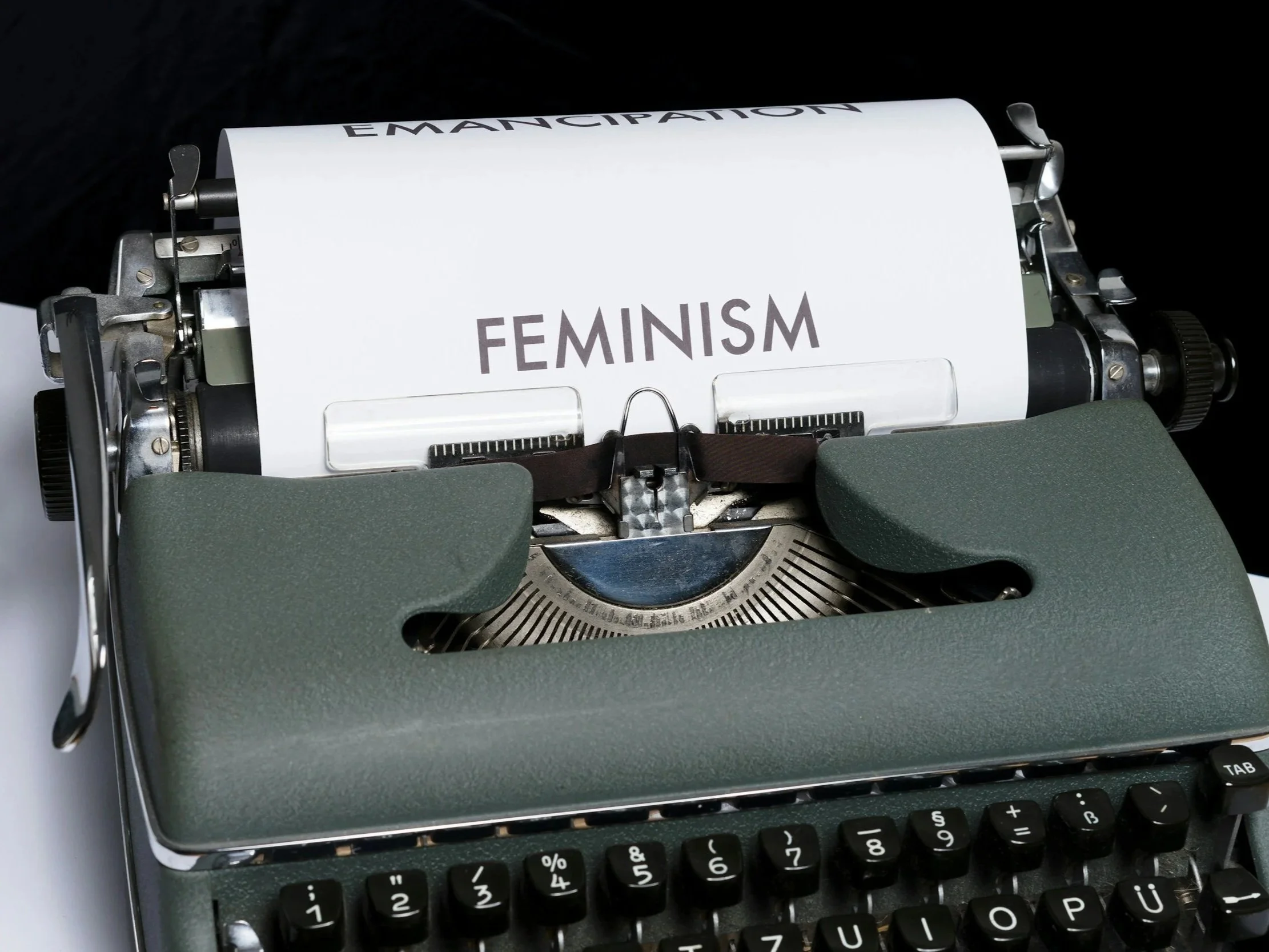
Woke. The right throws the word around like an insult. But I claim it with pride. It's who I want to be , and who I want my work to appeal to. People who do not necessarily have all the answers, but who are open to discovering new ideas, and looking at old systems with fresh eyes.
In this blog, I will initially explore my love/hate relationship with the modern romance genre, while trying to decide whether sharing a similar name with one of its most famous authors is ultimately going to help, or hinder, the search for an audience for the books I want to write. Help me by providing your own feedback on the genre. Do you love it? Hate it? Read it, but only when no one is around? Write it, but under a pen name so that you can be taken seriously when you publish “serious” work?
Of Heroes and Myths: Why the stories we tell ourselves are breaking us—and how they might still save us
If life worked liked fairy tales, romance novels, or action movies, Alex Jeffrey Pretti, would have saved the damsel in distress. He would have defeated the thugs attacking her and won the keys to the kingdom, and her love and devotion as well. That’s how fiction and fairy tales work. Good triumphs. Evil is vanquished.
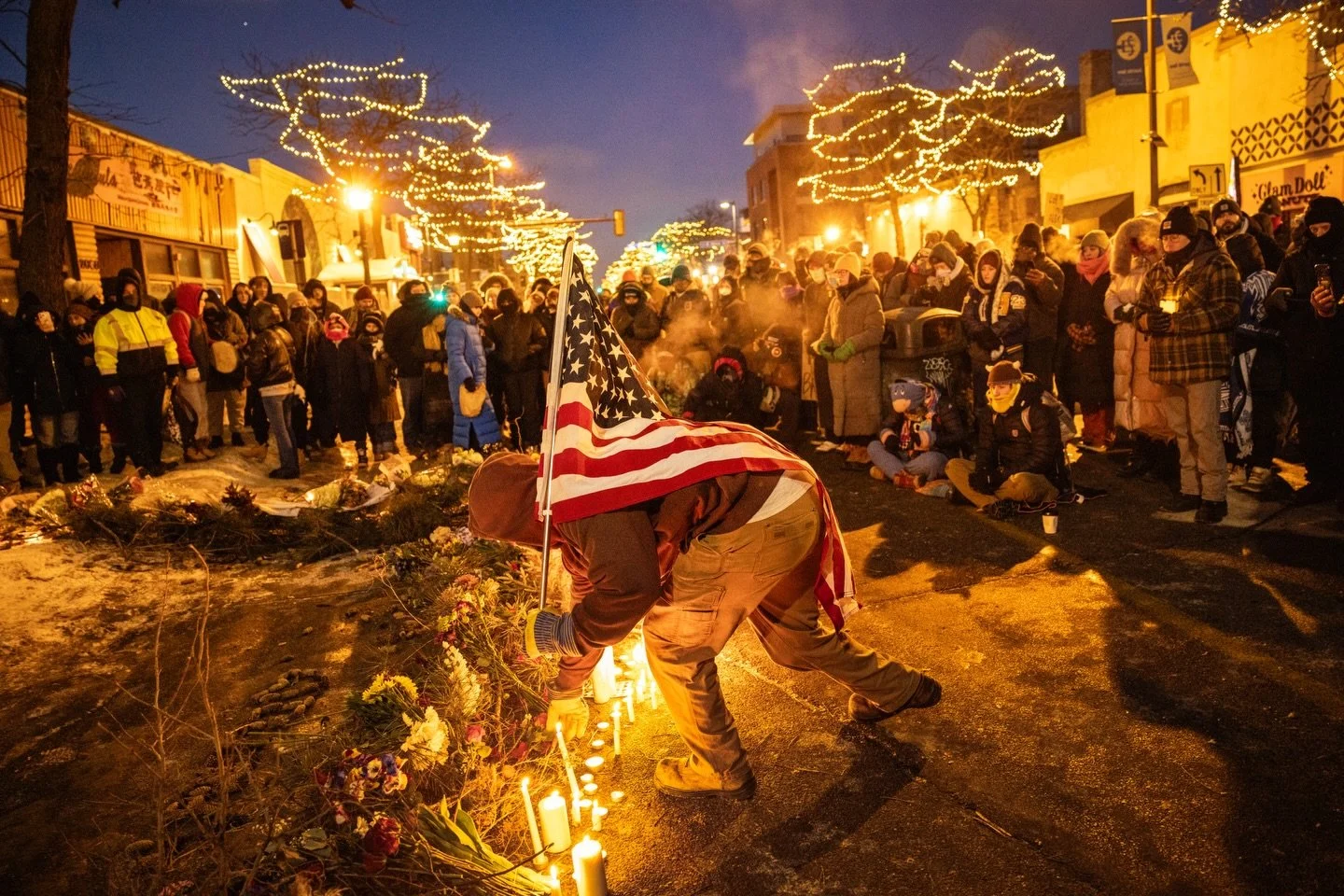
We’ve all seen the videos by now. On Saturday, January 25th, a mild-mannered ICU nurse from the local VA hospital witnessed a squad of federal agents push an unknown woman down on a cold Minneapolis street, and reached down to help her. He put his body between them and her as she struggled on the ground. For that act of kindness, he was knocked down himself, pepper-sprayed in the face, beaten and ultimately shot - even though the only thing he had in his hand was his phone - even though he never touched the gun he had a permit to carry - even though they had already disarmed him -even though 6 of them were holding him down. His last recorded words, spoken to the woman he tried to protect: “Are you alright? Are you alright?” After shooting him 5-10 times, the agent involved left the scene, and the Federal Government is refusing to reveal his identity. He slunk off and hid like a true coward.
Alex J. Pretti died a hero. Unfairly. Tragically. He died because he did what a hero does, put his life at risk to help another human being. And that just guts me, as it did most of Minnesota, and much of our country.
If life worked liked fairy tales, romance novels, or action movies, Alex Jeffrey Pretti, would have saved the damsel in distress. He would have defeated the thugs attacking her and won the keys to the kingdom, and her love and devotion as well. That’s how fiction and fairy tales work. Good triumphs. Evil is vanquished.
But here is the thing about fairy tales, romance novels, and action movies, they work as myths in our society. And what the people who study myths tell us is that myths function to resolve contradictions in a culture, contradictions that would otherwise threaten the culture’s existence. They contain a twisted logic that transforms something that is unacceptable into something acceptable.
In America, we want to believe our myths: good guys win; bad guys lose; honesty and character pay off; anyone can succeed if they just work hard enough; people fail because of character flaws like laziness or dishonesty. And because we want to believe, we devour the romance and action dramas like candy, or cocaine, until we are so buzzed with it that we can’t think straight.
Now here’s the twist: Once a culture has bought into the myth, it applies the logic of the myth to make something unbearable in real life, bearable.
Americans want to believe that good guys win, and are rewarded with wealth, love, fame, power, all the good stuff. And so we twist the logic and assume that anyone who has those things is, by default, a hero. Anyone who doesn’t is a villain. That logic is so deeply ingrained in western culture that the the word “villain” itself originally just meant poor person or serf.
Deep down, many of us know that myth is untrue. Many people at the highest pinnacles of power were either just born to wealth, or were willing to be ruthless to acquire it. Or both. You only need to look at our current administration to see the truth. And you only need to look at friends, relatives, and neighbors to know that many people will be honest, hard working, and kind, while living their entire lives only one lost paycheck away from homelessness.
Yet it is unbearable for us to live with the idea that Cinderella could never be good enough, pretty, enough, hard working enough, to win a prince and escape the ashes. That the bravest of knights could be vanquished by the evil ogre. That a man brave enough to put his body between a woman and a gang of men attacking her could be gunned down like a dog in the street.
Do you want an explanation for why we can have such a divided country? How we can have two such divergent views of reality in America? We are currently a country of two narratives: One spun by the people who cannot let go of the myth no matter what they see; one by the people who cannot let go of what they have seen in order to continue believing the myth.
I am in the second camp. I know that good guys don’t always win. Alex J. Pretti was proof of that. Renee Nicole Good was also proof. They both died for being heroes.
So where do I fit in as an author in this picture? What is my job and my role? As an author, I don’t just tell stories — I reckon with the tension between how the world is and how it could be. I don’t aim to erase hard truths, but to reframe them so that our most cherished ideals don’t become traps that blind us to reality.
Here is the new myth I want to create in honor of Renee Good and Alex Pretti, the new tale I want to tell:
Good does not always triumph at first; but it triumphs in the end.
Let’s make that happen. For Alex and Renee.

Fucking Bitch
“Fucking Bitch.” After seeing the video, after hearing those words, with everything happening in this country and this world, I found myself asking a question that felt almost obscene: how could I possibly spend my time writing about something as “trivial” as romance novels?
And yet—how could I not?
Two words. We all heard them.
“Fucking bitch.”
They were the first words spoken after ICE agent Jonathon Ross shot Renee Nicole Good. After seeing the video, after hearing those words, with everything happening in this country and this world, I found myself asking a question that felt almost obscene: how could I possibly spend my time writing about something as “trivial” as romance novels?
And yet—how could I not?
To emotionally process this nightmare, to answer my own internal howl of pain (How could this happen?), I have to dig back, and back, and back again into what I believe are the origins of the sexual revolution and the aptly named war between the sexes. Because I believe that the MAGA phenomenon that led to Trump’s ascendancy—and to the current brutal incarnation of ICE—is patriarchy’s final, desperate pushback against a world shaped in large part by feminism. A feminism that began, quietly and radically, with the first romance novels written by women, for women.
Let me explain.
England. Europe. America. The 1700s.
The introduction of cheap paper journals and printing presses in the 1600s had already started a quiet revolution. Women who had not previously been educated began to be taught to read and write—at first just well enough to keep household records and accounts. Soon, they began keeping private journals of their own dreams, thoughts, and feelings. And then they began not only to read books, but to write them.
By the 1750s, women were publishing novels under their own names, with women as the main characters and women’s lives as the subject matter. Unsurprisingly, these novels focused heavily on a woman’s choice of a mate, because a woman’s husband was often the single most important factor determining her happiness and standard of living.
And surprise, surprise: women wanted to choose for themselves.
They wanted to select partners based not only on money or connections, but on kindness, intelligence, attraction, and character. They believed—radically—that they had a fundamental right to seek happiness, or at least contentment, in marriage.
Romance novels set a new standard for men who wanted wives. Wealth and status were no longer sufficient. A man had to be physically pleasing, intelligent, refined. He could not be brutish or violent. He could not be a drunkard, a gambler, or a wastrel.
Men were not thrilled with this development.
As the romance novel evolved, so did the amount of control heroines—and by extension, women—exercised over their lives. Between 1750 and 1800, heroines were still expected to be obedient daughters, virtuous (meaning virginal), and careful not to reveal passion or desire before marriage. But by the time Jane Austen published Sense and Sensibility in 1811, it was possible for Marianne to completely “ruin” her reputation by openly loving a man to whom she was not engaged—and still be rewarded at the novel’s end with a rich, handsome husband who loved her deeply in return.
These books and their authors were met with fierce moral condemnation from male critics, writers, and religious leaders. Around 1750, the term Blue Stocking emerged to describe women deemed unmarriageable because their education and intellect supposedly made them unattractive to men. It was meant as an insult, a warning, a way to herd women back from the dangerous practices of reading, writing, and thinking too much.
Instead, women writers leaned into it.
They did not stop writing because famous men like Alexander Pope publicly excoriated them. They laughed all the way to the bank as denunciations drew attention and fueled public curiosity. They took the insult and incorporated it into their books, making intelligent, literate women admirable heroines. The characters who parroted society’s criticisms were portrayed as buffoons, villains, or both.
In Fanny Burney’s 1796 novel Camilla, Eugenia Tyrold—scarred by childhood smallpox—is educated in the classics to prepare her for spinsterhood. Instead, it is that very education, and the character it forms, that wins her love and marriage. Burney also introduces Mrs. Arlbery, a wealthy widow who chooses not to remarry and to maintain her independence. Both women are scorned and shunned by characters who turn out to be nothing more than greedy social climbers. Both women ultimately triumph, while their adversaries fail or perish.
With a single novel, Burney introduced two radical ideas into Western women’s consciousness:
Exercising one’s intellect would not preclude love.
Choosing not to marry—or remarry—would not preclude happiness.
We can’t know whether Jane Austen’s refusal to marry a wealthy family friend was directly influenced by Burney’s work, but we do know that Jane read Burney and admired her deeply. Pride and Prejudice takes its title from a phrase in Burney’s novel Cecilia. Austen’s characters are famously intelligent, opinionated, and voracious readers.
Romance novels and feminism fed each other.
Fast forward to the 1900s. With the introduction of the birth control pill, marriage was no longer a prerequisite for sexual passion. In 1972, Kathleen E. Woodiwiss published The Flame and the Flower, launching the era of the “bodice ripper.” For the first time, romance novels depicted women engaging in passionate premarital sex.
There were, however, two deeply unfortunate conditions. First, to preserve the heroine’s “virtue,” the initial sexual encounter was often non-consensual. Second, the rapist had to be redeemed—lust transformed into love—so that the story could end in marriage.
The one redeeming feature, and the reason these books were so wildly popular, was that they depicted women as experiencing and enjoying sexual desire. By the 1980s, authors like Jude Deveraux and Lisa Kleypas popularized romances in which heroines had premarital sex based solely on mutual attraction and consent.
Other boundaries fell more slowly. The first romance novel with a divorced heroine, The Ex-Wife by Ursula Parrott, appeared in 1929. The first lesbian romance, The Well of Loneliness by Radclyffe Hall, was published—and promptly banned—in 1928. These subgenres did not truly flourish until the 1970s, alongside Rita Mae Brown’s Rubyfruit Jungle and the passage of no-fault divorce laws and legislation ending gender-based discrimination in employment and finance.
With financial independence came real choice. Women could leave husbands. Marry better men. Marry women.
And yet there is one option that modern romance still rarely allows its heroines to choose: not marrying at all.
Instead, contemporary heroines are often introduced as professionally successful, socially fulfilled women who insist they don’t want marriage—only for the plot to reveal that this desire stems from trauma, fear, or emotional damage. The arrival of the hero “corrects” her thinking. Marriage is restored as the inevitable, healing end point.
And therein lies my heartburn with the modern romance novel.
Up until the 1970s, the genre expanded women’s sense of what was possible. It demanded more respect, more autonomy, more control. Then it stopped short. It ceased selling women freedom and began selling them heterosexual marriage as the highest form of fulfillment. In doing so, it became—wittingly or not—an arm of the backlash against feminism.
And backlash there was.
Men suddenly found themselves in a world where being wealthy, hardworking, sober, and conventionally attractive was no longer enough. A wife no longer needed to be beaten or cheated on to justify leaving. Sexual or emotional unhappiness was sufficient. A man had to win a woman’s affection—and keep it.
More unsettling still, men were no longer competing only against other men. They were competing against women’s ability to build satisfying lives without them at all. The question shifted from whether a woman made a man’s life easier to whether a man made a woman’s life harder.
Increasingly, women answered honestly.
The backlash was swift and organized. Christian fundamentalism surged in the 1970s alongside Roe v. Wade, easy access to birth control, and no-fault divorce. For every Gloria Steinem, there was an Anita Bryant or a Phyllis Schlafly. The Equal Rights Amendment was successfully scuttled in 1982. The 1990s brought purity rings, Rush Limbaugh, Dr. Laura, and a renewed obsession with “traditional family values.”
By 2000, Karl Rove had harnessed the Christian right into a reliable Republican voting bloc. By 2010, the internet gave birth to incel culture and the manosphere.
Incels—primarily heterosexual men aged 18–29—blame their inability to find partners on feminism rather than on their own unwillingness to adapt. Their online discourse is saturated with misogyny, sexual entitlement, and rape culture. Women are reduced to “femoids,” “holes,” “roasties,” “Stacys,” “Beckies,” and “feminazis.” The slogan “Your body, my choice,” popularized by Nick Fuentes after Trump’s 2024 election, distills the conflict perfectly. This is not about sex. It is about control.
Which brings us back to January 7, 2026, and the killing of Renee Nicole Good.
That killing could not have occurred in the same way without Donald Trump’s elections in 2016 and 2024. It could not have occurred without the weaponization of ICE and the normalization of state violence against perceived enemies. Trump’s victories depended heavily on young male voters and self-identified Christians—people who supported him not despite his misogyny, but because of it.
This was never a campaign for Christian values. It was a campaign against female power, minority power, and any power that did not belong to rich, white, heterosexual men.
Renee Nicole Good was a citizen. She was partially blocking a road—a nonviolent act not punishable by death. Her real crimes were observing men who did not want to be observed, being married to a woman who spoke back, failing to obey quickly enough, and refusing to remain passive and compliant.
For that, she was shot three times at close range. In front of her wife.
And the words chosen to define her, in her final moments, were “fucking bitch.”
In the days following her death, reports surfaced of ICE agents telling civilians who resisted or filmed them, “Haven’t you learned anything from what happened?” They didn’t need to explain. Everyone understood the threat.
And yes—I am scared.
I live in a small rural town, but I know myself. If I witnessed an ICE action, I would take out my phone and start filming. I would not roll down my window on command. I would not unlock my door. I don’t want to die. I don’t want to be beaten or jailed.
And yet—I want to lean into this.
I want to take the words Fucking Bitch and claim them the way women once claimed Blue Stocking. I want to print them on pins and hand them out in honor of Renee Nicole Good. It won’t bring her back. But it will refuse the silence they rely on.
They may break our windows. They may drag us from our cars. They may call us fucking bitches.
But we will wear the name proudly.
Because they will never own us.
Intro: Why is a Feminist Poet Writing About Romance?
Romance. The genre everyone loves to hate. Or at least to disparage. Feminists, in particular, often struggle to come to terms with it. I know I do. . .
Romance. The genre everyone loves to hate. Or at least to disparage. Feminists, in particular, often struggle to come to terms with it. I know I do. What’s not to love about strong, intelligent heroines finding love, commitment, family, and happy-ever-after endings? Except maybe how it has more in common with fairytales and fantasy than it does with real-life outcomes. Or how it tends to prop up traditional patriarchy even while espousing sexual, and professional liberation. Or how its heroines are mostly straight, white women falling in love with straight, white guys, while people of color or LGBTQBIA+ folks are merely supporting characters — if they appear at all. Or how the genre’s overall message can be summed up: Women can have it all; but since they really can’t, they should make sure to choose the handsome, hard-working, middle-or-upper class guy (and his kids, or desire for kids) if they don’t want to be miserably alone at the end of their lives.
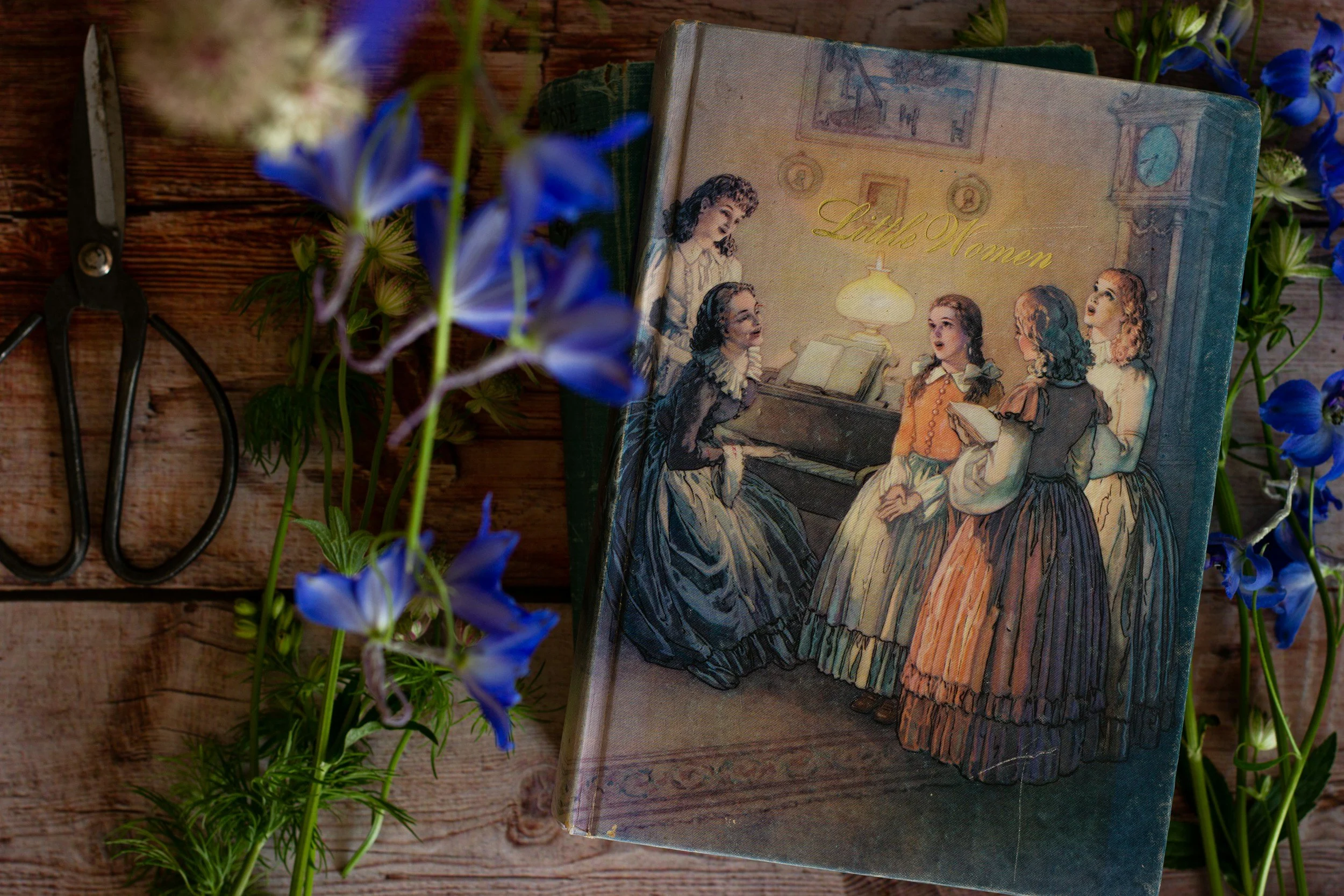
Don’t let that last sentence persuade you for even one minute that I don’t read romance or watch it on TV. Or even that I don’t enjoy it. I’m currently immersing myself in Spanish one hour a day by watching Hallmark En Espanol on my Roku TV. And it’s not torture. It’s my immersion experience of choice. When I embark on my annual 10 day fishing trip up north, I load up on chick-lit and rom-coms in case it rains hard enough to confine me to the cabin. And I grew up on a diet of Austen, Alcott, and Bronte, along with those classics of contemporary romance: Georgette Heyer and Barbara Cartland. I even followed the formula: marrying after college graduation, having 2 kids, 2 dogs, a house in the suburbs, and a Volvo station wagon.
Yet somehow I considered myself then, and consider myself now, to be a feminist. I was an original subscriber to MS Magazine, and treasured my copy of Our Bodies, Ourselves until the day it perished in a basement flood. I burned my bra (metaphorically) and marched to Take Back the Night. I was a wife and mother, but I also became a divorced, single mother who didn't remarry for 15 years. I went back to grad school, and I worked in male-dominated fields: first computers, then 35 years in legal metrology. (Weights & Measures)
So why share this with you all now? Well, because in the last half of my life, I have suddenly found myself wanting to actually do something with my lifelong fantasy of writing and publishing. And for better or worse, one of the most popular, and prolific romance writers of our time, uses a close analog of my name as her pen name. On Amazon, and most other platforms, you can’t get to Julie Quinn, author of the poetry chapbooks Resting Bitch Face, and Daughter,Lover, Mother, Crone, without wading through pages of book listings for Julia Quinn, author of the Bridgerton series. (But you can find direct links on my web page juliequinnbooks.com - just saying!)
That wasn’t a big deal when I self-published two chapbooks of poetry. Poetry chapbooks are pretty much a vanity project no matter what your name is. Few people buy poetry at all, especially not self-published poetry. You just put it out there to share with your friends and family, and to have the satisfaction of having your creative expression physically manifest in the real world. It not only didn’t matter that Julie Pottinger was using a form of my name as her pen name; it came in handy when I had to come up with an author bio. Instead of listing my meager publication credits, and an unfinished Masters in Creative Writing from Hamline University, I wrote a funny disclaimer to ensure that I was not confused with THE Julia Quinn, famous romance author, and to notify Shonda Rhimes that she is welcome to make a Netflix series out of anything I’ve ever written. (So far, she has not called.)
But now…well, now is a different story. I’ve been sitting on an idea for two non-fiction books (What We Say to Bob, and What We Say To Sue) for about 3 years now. As soon as I mentally committed to editing and printing them in 2026, the flood gates of my dormant creativity flew open. In the last month, I’ve already written the first draft of a children’s picture book (I am Not a Sweetpea) and outlined a novel (working title: On the Day She Died.) Now the question is, will being forever associated with the famous Romance author, help find an audience for these books, help or hurt me? Do I need to find my own pen name in order to win audiences and gain credibility?
The next 12 blogs will look at both the things I love and hate about the romance genre. If I have my SEO words optimized, and the algorithms do their jobs, I’ll find romance readers, who also might also consider themselves to be readers who are woke. Or not. We will see. Let the adventure begin!